Japan Quests
Eki stamps: how to collect Japan's free station stamps
Updated 2026-11-04
What is an eki stamp
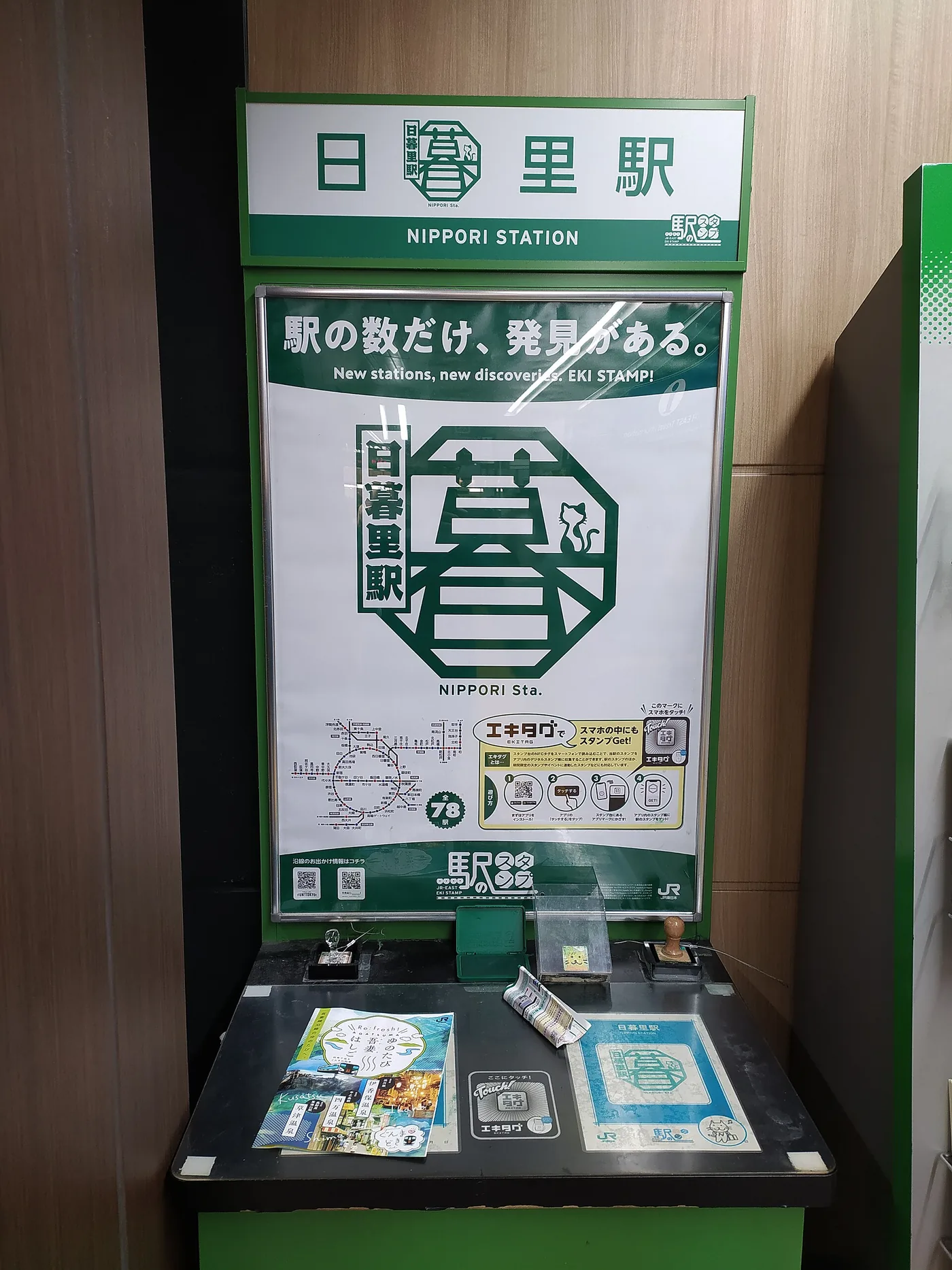
An eki stamp (駅スタンプ) is a free rubber stamp kept at a railway station in Japan. The design typically features a local landmark, regional speciality, mascot character, or the station building itself. Unlike the formal calligraphy of a temple goshuin (御朱印), these stamps use simple ink-pad rubber printing and require no payment or ceremony.
The practice grew from railway companies wanting to encourage tourism and provide a souvenir that costs nothing to collect. A stamp from a mountain station might show the peak and the station name in stylised characters. A coastal town's stamp might feature the harbour or a famous seafood. Urban stations sometimes use cartoon mascots or historical monuments. The designs change over time, and some stations rotate seasonal versions.
Collecting eki stamps suits travellers who enjoy documenting their routes without the expense of buying trinkets at every stop. The stamps work particularly well for long-distance train journeys, rural lines, and systematic coverage of a region's stations.
Where to find eki stamps at stations
Most stations keep their stamp near the ticket gates, often on a small table or shelf in the concourse area just outside the gates. Larger stations may place stamps near the station office window or the tourist information counter. Unstaffed rural stations sometimes keep the stamp on a windowsill or attached to a post near the platform entrance.
If you cannot see a stamp after a quick search, the simplest approach is to ask at the staffed ticket window. The phrase "eki stamp wa arimasu ka" (駅スタンプはありますか) means "do you have a station stamp" and usually produces either the stamp itself or directions to where it sits. Station staff understand the question immediately because stamp collectors visit regularly.
Some stations display a sign indicating where the stamp lives, but not all do. Smaller stations with minimal foot traffic may have moved their stamp to prevent loss, in which case the staff will retrieve it for you. Do not walk through the ticket gates to search for a stamp without a valid ticket—always ask first if the stamp location is unclear.
Choosing a stamp book
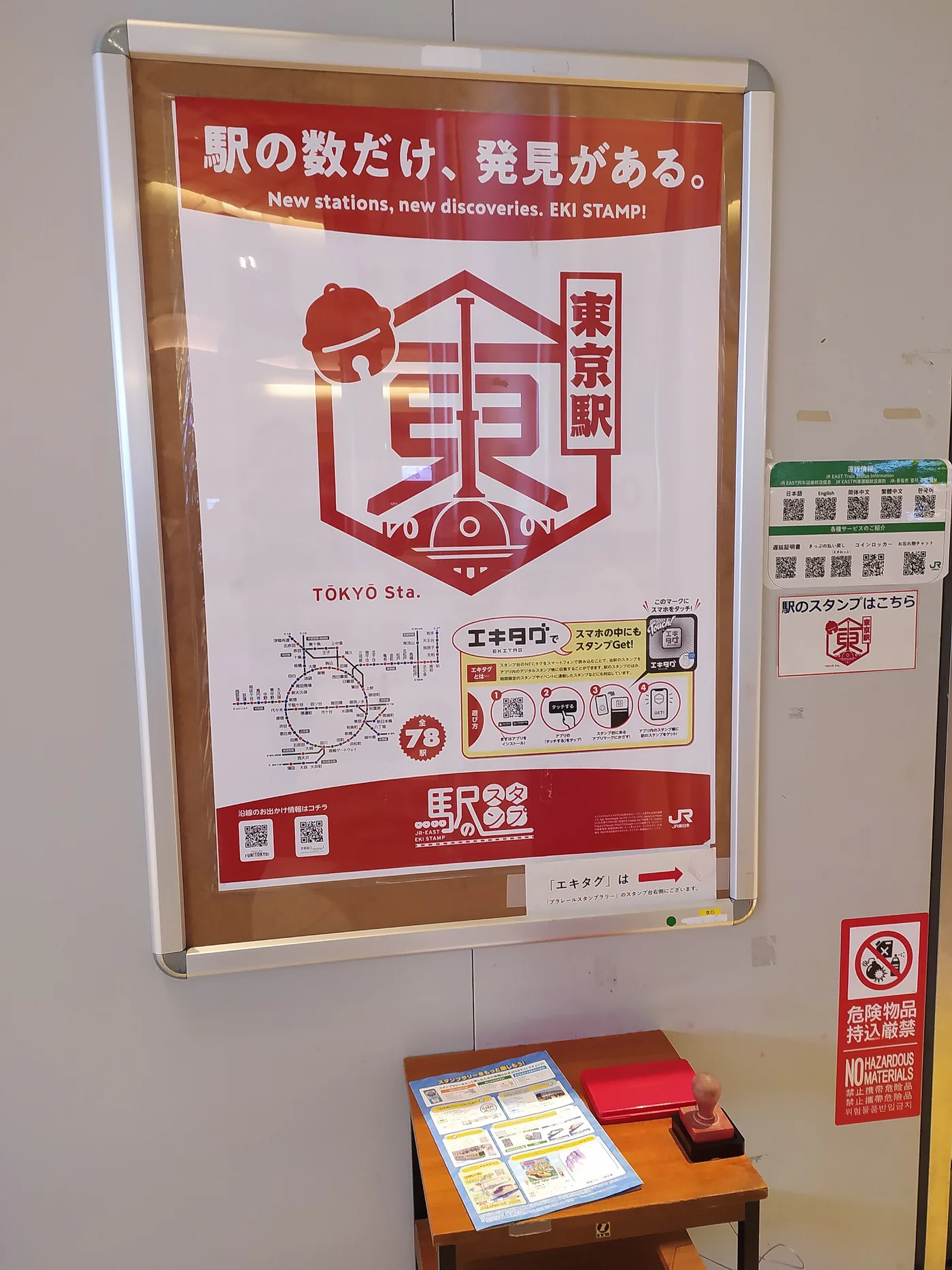
Any notebook with reasonably thick paper will hold eki stamps. Standard office notebooks work, though the ink may bleed through thin pages. Art supply stores sell sketchbooks with heavier paper that handles ink better and allows stamps on both sides of each page.
Stationery shops near major stations often stock books specifically designed for stamp collecting. These usually measure around A5 or B5 size, which accommodates most stamp designs comfortably. Some collectors prefer smaller books that fit in a jacket pocket, while others choose larger formats to leave space for notes beside each stamp.
A goshuinchō, the accordion-fold book used for temple and shrine goshuin, is not appropriate for eki stamps. Those books serve a specific spiritual purpose and mixing casual station stamps with religious calligraphy would be considered disrespectful. Keep your station stamp collection in a separate notebook.
Station stamp programmes in major cities
JR East operates station stamp campaigns across its network, which covers Tokyo and much of eastern and northern Japan. The campaigns usually run for several months and feature participating stations within a defined region or along specific lines. The number of stations involved changes with each campaign, and not every station on a line necessarily participates.
Similarly, JR West runs periodic stamp rallies in the Kansai region covering Kyoto, Osaka and surrounding prefectures. These campaigns often tie into seasonal events or anniversaries. The railway company's official website lists current campaigns, though the information appears primarily in Japanese.
Private railway companies also maintain stamp programmes, particularly those serving tourist routes. The specifics vary widely: some companies keep permanent stamps at all stations, others rotate designs quarterly, and a few run stamps only during special promotions.
Tokyo's major stations like Tokyo, Shinjuku and Ueno usually have stamps available year-round, though the designs may change. In Kyoto, Kyoto Station maintains a stamp, as do several stations along tourist routes to Arashiyama and Fushimi Inari. Osaka's main stations including Osaka, Shin-Osaka and Tennoji typically participate in regional campaigns when active.
Practical guidance for collecting stamps
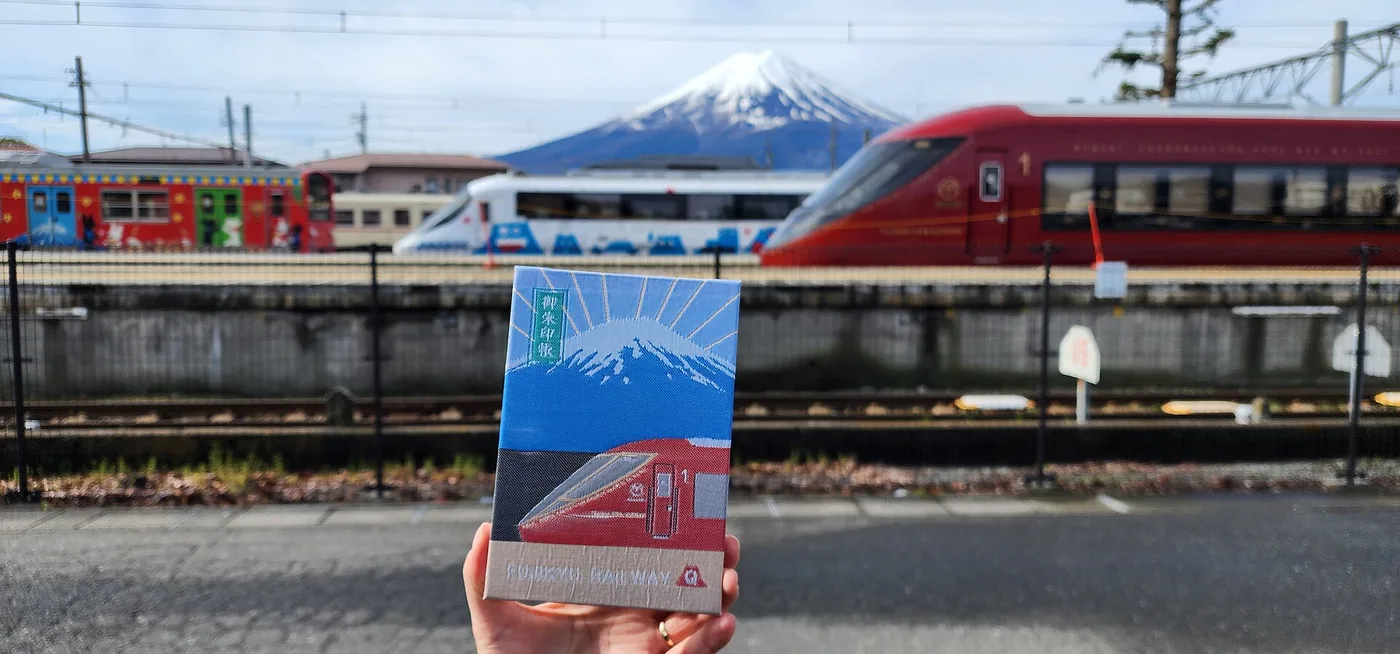
Before pressing a stamp into your book, test it on a piece of scrap paper. This shows you how much ink remains on the pad and how much pressure produces a clear impression. Some stamps have worn pads that need a firm push, while others are freshly inked and require only light contact to avoid smudging.
Press the stamp straight down and lift it straight up without rocking or sliding. Hold the book flat and stable, not at an angle. If the stamp has uneven ink coverage, you may be able to adjust the pressure on your second attempt, but do not stamp repeatedly in the same spot trying to darken a faint impression—this usually makes the image worse.
Do not block ticket gates or busy walkways while stamping. Step aside to a quieter area where you can work without obstructing passengers. During rush hours at major stations, consider returning at a calmer time rather than trying to stamp while crowds surge past.
Stamps occasionally go missing. Station staff may have removed one temporarily for re-inking, or it may have been misplaced. If a stamp is absent and staff cannot locate it, accept this as part of the collecting experience. Worn stamps with faded designs are common at busy stations—the impression will be lighter but still records your visit.
Digital station stamps and EKITAG
JR East offers a digital alternative through EKITAG, a smartphone app launched in 2023. Participating stations have a small NFC tag on a sign or stand; you hold your phone against it and the app adds that station's digital stamp to your collection. Nothing is recorded automatically—you still have to find the tag at the station.
EKITAG covers a growing number of JR East stations but not the entire network, and some other railway companies have joined the scheme. The app provides a clean digital record and requires no paper book, though it lacks the tangible quality of a physical stamp collection. Some travellers use both methods: digital for routine commutes, physical stamps for special journeys.
Remote stations and the Secret Stations collection
Rural and remote stations often maintain stamps even when passenger numbers are low. These stamps frequently show dramatic natural scenery—mountains, coastlines, gorges—that justifies the journey itself. The stamp becomes a record of reaching a place few travellers visit.
Some collectors specifically seek out Japan's most isolated stations, where a train might arrive only a few times per day and the station building is a simple shelter. The Secret Stations of Japan pack in Japan Quests highlights particularly remote locations across the country. These stations reward travellers with solitude, landscape and a sense of discovery that busy urban terminals cannot match.
Collecting stamps at remote stations requires planning around infrequent train schedules. Check timetables in advance and allow enough time between trains to explore the immediate area. Some remote stations have no staff, so the stamp will be in a designated public area if available at all.
The connection with goshuin
Eki stamps occupy a different category from goshuin, the calligraphic seals offered at temples and shrines. A goshuin (御朱印) is a religious document hand-written by shrine staff or monks, accompanied by vermilion seals, and received for a fee typically around 300 to 500 yen. The practice connects to pilgrimage traditions and spiritual journeys. The goshuin guide covers the etiquette and meaning of that tradition in detail.
Station stamps require no fee, no queue for personal service, and carry no religious significance. They are purely secular souvenirs celebrating travel itself. Some collectors pursue both practices, keeping goshuin in their dedicated accordion book and station stamps in a separate notebook. Others focus on one or the other based on interest.
The Saigoku Kannon Pilgrimage represents one of Japan's historic temple routes where goshuin collection forms part of the traditional experience. Travellers following that route may collect station stamps at railway stops along the way, creating parallel records of the same journey through different media.
Goshuin, eki stamps and Japan Quests
Japan Quests records a digital stamp for each location you physically reach, covering 1,634 places grouped into 33 themed packs. The app works alongside physical collections of goshuin and eki stamps rather than replacing them. When you visit a temple on a pilgrimage route, you can receive the hand-written goshuin, stamp your notebook at the nearest station, and record the digital achievement in Japan Quests.
Many locations in the app offer no physical stamp at all—certain remote stations have discontinued their stamp programme, and many temples choose not to offer goshuin. Japan Quests still records your arrival, documenting places that would otherwise leave no tangible trace in a collection. The app is Android-only and available from the Japan Quests homepage.
The digital record complements physical collecting by capturing locations where no paper souvenir exists. Travellers who maintain both a stamp book and the app build a more complete archive of their routes across Japan.
Common questions about eki stamps
Do all railway stations in Japan have stamps?
Not all stations maintain eki stamps. Major stations in large cities and tourist areas usually do, as do many rural stations on scenic routes. Private railway companies vary in their approach—some have comprehensive stamp programmes while others offer none. The presence of a stamp depends on the individual railway company and specific campaigns running at the time.
Can I collect eki stamps without buying a train ticket?
Usually yes. Most stamps sit outside the ticket gates, in the concourse or by the ticket office, so anyone can use them. A few stations keep theirs inside the paid area; if you cannot see one outside, ask the staff at the gate rather than entering without a ticket.
How much does an eki stamp cost?
Eki stamps are free. You provide your own stamp book and simply press the stamp yourself. There is no fee, no required purchase, and no obligation. This distinguishes them from goshuin, which involve a monetary offering.
What should I do if the stamp pad is dry?
If the stamp pad has insufficient ink and produces a faint impression, inform the station staff. They may be able to re-ink the pad or provide an alternative. Do not attempt to add your own ink or press the stamp multiple times in the same spot, as this rarely improves the result and may damage your book.
Can I stamp my ticket or a piece of random paper instead of a book?
You can stamp anything that fits under the stamp and holds ink. Some collectors use individual cards or postcards filed later. A bound book keeps everything organised and prevents loss. Train tickets work but are small and easily misplaced.
Are there seasonal or limited-time stamps I should know about?
Many stations rotate stamp designs seasonally or for special events and anniversaries. If you want a specific design, check the railway company's website for campaign dates. Limited designs attract collectors and may draw small crowds during the first few days of availability.
All of it is in the lifetime unlock
The 33 packs — and every pack released after them — are included in the lifetime unlock while the launch offer lasts. After that, a new pricing model applies.